How to Childproof Indoor Stair Railings Without Compromising Style In Vancouver Homes

Updated: Dec 14, 2025
For families with young children, home safety is a top priority, especially around staircases. While interior railings add design and value to your space, it's important they’re secure and child-friendly. In this guide, we’ll walk through practical ways to childproof indoor stair railings while maintaining the style and function of your home.
Fortunately, with some smart design choices and awareness of local building codes, you can have safe railings for children without compromising your interior design. In British Columbia, the building code sets minimum standards for railing height and spacing to ensure baseline safety.
From there, homeowners can go a step further, choosing kid-friendly railing designs, materials, and installation practices that make indoor stairs much safer for little ones. This blog will cover what the stair railing code BC requires and highlight the best practices for child-proofing your interior railings.
If you’re planning a new staircase or railing in the Lower Mainland, you can see examples of our work in the Interior Railings Gallery
or learn more about our installation services
BC Building Code: The Starting Point for Railing Safety
When planning indoor stair railings in Vancouver, your first consideration should be the BC Building Code. These regulations exist to keep everyone safe – especially children. A few key requirements include:
Railing (Guard) Height: In most homes, any elevated area or open side of a staircase with a drop over 24″ must have a guardrail. The code specifies that interior guards be at least 900 mm high – about 36″ from the floor or stair nosing. (Some municipalities like Vancouver prefer an even taller 42″ height for extra safety. This height prevents adults and kids alike from toppling over the railing.
Baluster Spacing (the “4-Inch Rule”): To avoid children slipping through, any gaps in the railing should be very small. The BC code requires that a 100 mm sphere (about 3.9″) cannot pass through any opening. In simple terms, your balusters (vertical pickets) or any decorative openings must be less than 4″ apart. This railing safety for kids rule stops infants and toddlers from squeezing their bodies or heads between the rails. Even the triangle gap at the bottom of a stair railing must be small enough to satisfy this rule
No-Climb Designs: Another critical code point is that guards should not be easy for children to climb. The BC Building Code explicitly states that guards must be difficult for a child to scale – for example by using vertical pickets or solid panels instead of horizontal rails. The concern is that horizontal bars or ladder-like designs could invite kids to climb up. Many jurisdictions interpret this to mean no horizontal or decorative footholds in the lower part of the railing (from a few inches above the floor up to roughly 3 ft). In practice, that means interior railings Vancouver homes use for safety are usually designed with vertical or solid infill rather than horizontal rungs.
By following these base guidelines on height, spacing, and climbability, you’ll be in compliance with the stair railing code in BC, and you’ll already have eliminated the most obvious hazards. But code is just the minimum. As a parent, you may want to go beyond the minimum requirements to make your stairway extra safe and child-friendly. Below we discuss some design tips that exceed code to give you even more peace of mind.
Design Tips for Childproof Indoor Stair Railings
Designing a kid-safe staircase doesn’t mean you have to settle for an industrial or bland look. It’s about making thoughtful choices so the railing itself helps protect your child. Here are some top design and material considerations for railing safety for kids in your home:
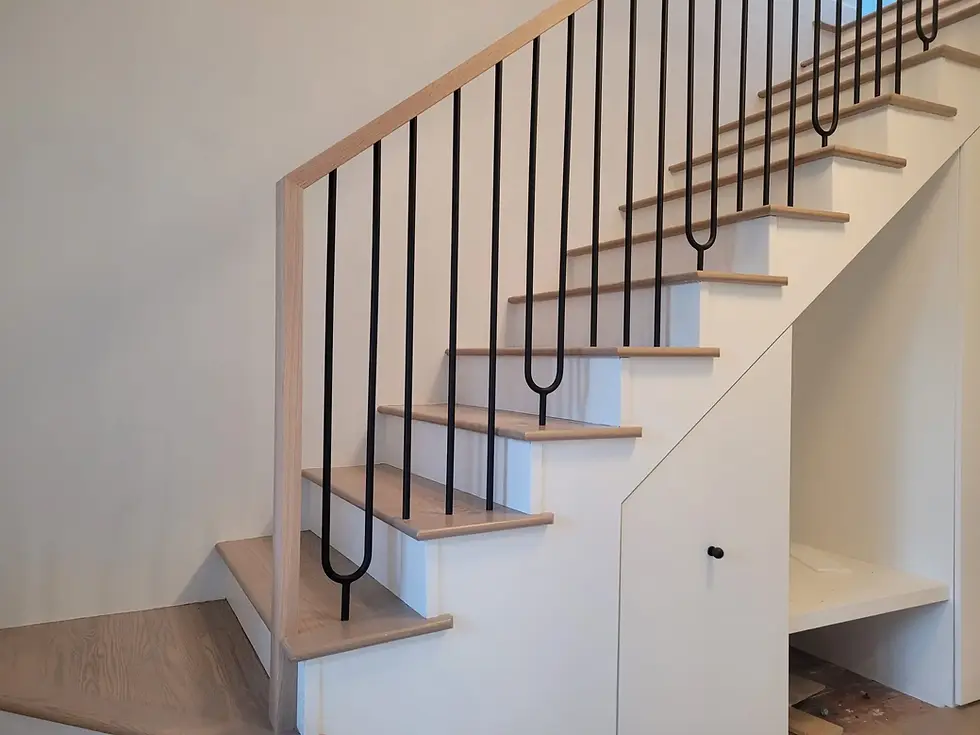
Vertical pickets like these are a classic safe design for families. They provide a barrier that toddlers can’t easily scale and keep gaps narrow, all while looking elegant. In modern family homes, you can achieve a stylish look without sacrificing safety by using sturdy wood or metal balusters and a continuous graspable handrail.
Close Off Open Risers: If your staircase has open risers (the vertical space between steps), consider closing them.

Open-riser stairs may look airy and modern, but they’re not ideal with young children – kids might try to crawl through the gaps or can slip a foot through. Closed risers (solid panels or boards behind each step) create a safer staircase by eliminating this hazard
Smooth, Rounded Edges: Pay attention to the railing’s profile and any exposed edges or corners. Choosing a smooth, rounded handrail and rounded newel post caps can prevent injuries if a child bumps into them. Sharp corners or ornate details that stick out can bruise or cut a small child. It’s wise to avoid any decorative spear-like finials or pointed metalwork on indoor railings. Instead, go for gentle curves and smooth finishes that are friendly to little hands and heads. Even the tread nosings (step edges) should ideally have a slight curve to reduce tripping hazard.
Tempered Glass or Acrylic Panels: If you desire a contemporary look, consider using tempered glass panels as your railing infill. Glass railings eliminate all gaps entirely – nothing for a child to stick limbs through – and they can’t be climbed because there are no footholds. Importantly, use safety glass (tempered or laminated) that meets code requirements so that even if it somehow breaks, it shatters into harmless pieces.
Glass gives a very open feel to your space while providing a secure barrier for kids (just be prepared for lots of fingerprints at toddler height!).
Safe Installation and Maintenance
Even the best railing design needs proper installation to truly be child-safe. Poorly secured railings, or cheap construction can create hazards, so it pays to use a qualified installer or follow professional guidelines closely. Here are some installation and maintenance tips to keep in mind:
Anchor Railings Securely: Your railing must be able to withstand kids pulling, leaning, and even climbing on it without budging. That means mounting handrails and guard posts into solid structure (wall studs or floor framing) never just into drywall.
Eliminate Rough or Protruding Hardware: As you install (or if you inspect an existing railing), check for any bolts, screws, or fasteners that stick out or have sharp edges. These should be countersunk, capped, or filed smooth so they don’t snag clothing or scrape skin. Also ensure there are no gaps between the railing and the wall where a small hand or foot could get stuck. A well-installed railing will have all parts nicely finished and child-friendly.
Regularly Inspect and Maintain: Once your interior railing is in use, periodically check it – especially if you have active kiddos. Over time, screws can loosen or wood can develop small cracks. Give the railing an occasional shake test to make sure it’s still rock solid. Also look for any damage: a cracked baluster, a wobbly newel post, etc., and repair it promptly. Keeping the stairs and railings in good shape will prevent accidents. And of course, as a basic habit, keep the staircase clutter-free – toys and clutter on steps can trip up even an adult, let alone a child.
Designing safe railings for children in your home is all about thoughtful choices and quality execution. By adhering to the BC code for basics like height and spacing and then incorporating child-friendly features (closed risers, non-climbable indoor stair railings, smooth edges, etc.), you create a staircase that not only looks beautiful but also significantly reduces the risk of childhood falls and injuries.
Vancouver residents can take pride in knowing their stylish interior railings are also a protective guardrail for their family.
Remember, you don’t have to sacrifice style for safety – modern railing solutions offer both. Whether you favor classic wood spindles or sleek glass panels, what matters is that the design keeps little ones secure. If you’re renovating or building and feeling unsure about how to meet the interior railings Vancouver safety requirements, consider consulting a professional.
Classic Railings Ltd and other experienced local contractors can help you navigate BC’s building code and customize a railing that fits your home’s aesthetic while keeping your children safe. With the right approach, you’ll gain peace of mind and a beautiful staircase that will safely serve your family for years to come.
Want to see what these details look like in real homes? Visit our interior stair railing gallery.
See everything we offer on our interior stairs and railings services page.
FAQ
Can I childproof my existing stair railing, or do I need to replace it?
You likely don’t need to replace the entire railing. Many child-safety improvements can be retrofitted onto your current staircase. For instance, a contractor can close up wide gaps (by adding extra balusters or a clear safety panel), swap out a wide climbable top rail for a low-profile cap, or install a wall-mounted gate post, all without rebuilding the whole railings. A good installer will reuse any sturdy components and only upgrade the weak spots needed to meet safety standards.
Are glass or cable railings safe for homes with children?
Yes. Modern glass railings are made with tempered or laminated safety glass and, when built to code (e.g. at least ~900 mm high with gaps under 100 mm), they are very secure even for homes with toddlers. Glass panels actually remove the footholds that kids might use to climb, making them hard to scale. Properly installed cable railings are also considered safe. In short, both glass and cable can be family-friendly railing options as long as they’re installed to meet safety standards.
Request a quote for your own project, and we’ll review your plans or photos